

Work in progress for this page
Lecture for Erasmus Medal 2005, Academia Europeae: Pierre Léna, From science to education: the need for a revolution.
Institut de France, formal Session on Education under the Coupole, 28 Octobre 2008. Pierre Léna, La science pour tous : illusion ou nécessité.
School children and science, in France (1995-2026)
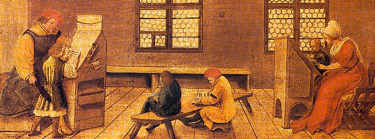
Under the impetus of Georges Charpak, Nobel Prize laureate in Physics (1992), together with Yves Quéré, myself, and with the support of the French Academy of Sciences, La main à la pâte was created in 1995 to revive—albeit in a transformed way—the traditional “lesson of things” in all primary schools across France.
Our goal was to respond to and stimulate children’s curiosity about natural phenomena, guiding them through the first steps taken by any researcher in science: observing, questioning, experimenting, reflecting, sharing, and expressing themselves with precision. Tested in 344 classrooms, the initiative grew, bringing together primary school teachers who often discovered that science is not inaccessible—neither for them nor for their students—and who found enjoyment in exploring it through inquiry.
In 2011, the Foundation La main à la pâte was established through the “Investments for the Future” public program with the backing of Michel Rocard, former Prime Minister of France. With such continuous effort until 2026, natural sciences—closely linked with mathematics and the practice of the French language—are present, at least in some classrooms, from kindergarten through to the final year of primary school (CM2, i.e. Grade 5).
Children and science, throughout the world 1996-today
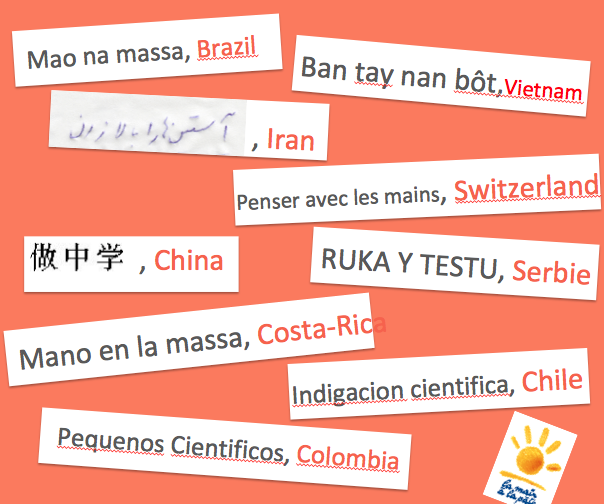
Since the 1990s, various countries have been concerned with renewing their teaching of the natural sciences. When learning is too often reduced to notions to be memorized, miss contact with observation and experience, it does not feed the curiosity of young children, preparing them poorly for their future. After 1996, La main à la pâte exchanges and shares its resources, finds partners in United States, Brazil, China… Often eminent scientists are heard by the educational authorities, help teachers to renew their practices and better understand the nature of the scientific process. From 2000 onwards, networks were organised in Europe, Latin America and South-East Asia. Supported by the InterAcademy Partnership and science Academies, this educational ambition remains alive in 2026, while science continues to evolve, but also encounters unexpected obstacles, made up of contestations and doubts in societies.
The National Institute for Pedagogical Research INRP (1991-1997)
This Institute, issued from the Musée pédagogique (1878), was created in 1970 and inspired by the pedagogical movements of “éducation nouvelle” (John Dewey). I chaired its Councils (1991-1997) with exceptional directors (F. Dugast, J.F. Botrel, A. Hussenet), and Annette Bon. By developing research, particularly in the history of education, and the preparation of PhDs, we have once again brought INRP closer to the pedagogy of the natural sciences, where he had shone. From 1997, the French Académie des sciences associated the INRP with the program La main à la pâte. Becoming Institut français de l’éducation and integrated into the École normale supérieure (Lyon) in 2011, the Institute continues its mission of research on the education system, and of support for its actors.