Foreword
Fully embracing its role as a research and coordination federation, the Fédération Nanosats is launching a brand new series of online seminars entirely dedicated to scientific nanosatellite projects. Every second Thursday of the month at 2:00pm starting in November, renowned scientists and engineers will be invited to present their projects and main findings and share their experiences. This is a unique opportunity to bring together international experts in scientific newspace for a monthly event.
From studying the Earth and its environment to observing the universe, whether the nanosatellite is launched alone or in a constellation, discover some of the most promising projects and hear testimonials from people involved in experimental programmes through this series of seminars.
Programme
Autumn

13 november, 2025
BRITE-Constellation: Shoebox-sized satellites for variable star research
During their 12 years in space, the five BRITE-Constellation nano-satellites have completed observations of about 730 individual targets typically brighter than about 6th magnitude. The data have allowed us to study a variety of variability phenomena covering a wide range across the HR-diagram including different types of pulsations, wind phenomena, rapidly rotating stars (e.g. Be), binary and multiple systems, and stars with planets. Some of the prime science results therefore comprise the discovery of massive heartbeat systems, the apparent interaction of phenomena on very different time scales in Be stars, observations of a Nova, or the presence of only two pulsation modes in a magnetic delta Scuti star.
I will give an overview of the BRITE-Constellation mission and show selected highlights of the scientific results achieved with BRITE-Constellation data.
Konstanze Zwintz, University of Innsbruck
is professor at the University of Innsbruck. Her research focuses around an improvement of the description of early stellar evolution through pulsations. She is member of the BRITE-Constellation Executive Science Team and has contributed to the mission since its start.
11 december, 2025
Cubesats for Space Science
In the 25 years since they were introduced, CubeSats have grown from small educational experiences to full-fledged missions. The University of Colorado Boulder has been involved in CubeSats for almost 20 years, and specializes primarily in scientific missions. At least nine missions led by CU Boulder have been launched and operated, and another seven are being prepared for launch in the next two years. These missions span science goals ranging from solar X-ray observations, radiation belt measurements, electromagnetic waves in space, magnetic fields, astrophysics and exoplanets, and more.
In this talk, I will give an overview of CU Boulder’s approach to CubeSat missions, with a focus on three missions that have been developed in parallel over the past four years. I will describe how the missions were conceived and awarded, their science goals, and the development process. I will further describe the future of space science CubeSats at CU Boulder and elsewhere.
Robert Marshall, University of Colorado
Professor Robert Marshall studies the Earth’s upper atmosphere, ionosphere, and radiation environment through modeling, data analysis, and instrument development. He currently leads the development of three CubeSat missions with different science goals, all slated to launch in early 2026.

Winter

08 january, 2026
The ROBUSTA-3A adventure: designing, testing and operating an educational and technological 3U CubeSat for scientific purposes
The Centre Spatial de l’université de Montpellier (CSUM) launched ROBUSTA-3A (Mediterranean), its first 3-axis controlled 3U CubeSat, on the maiden flight of Ariane 6 in summer 2024. Its main mission is to relay meteorological data from onboard beacons at sea to Météo France via the Montpellier ground station, in order to help forecast Cévenol weather events. The satellite also carries an experiment to measure the effects of radiation on electronic memory.
Like the other CSUM satellites, this CubeSat has been developed entirely in-house with the involvement of several hundred students and engineers from the organisation. It has been integrated and tested at the CSUM using equipment and test infrastructure developed and operated on site, including a system test bench, vibration shaker, thermal vacuum chamber, etc. It is currently operated from the CSUM’s UHF and S-band ground segment.
After more than a year in orbit, this presentation offers initial feedback on the design, testing and validation, as well as the operations of this first 3U CubeSat from Montpellier: from the complexity of the AIT phases to potentially ‘mission-killer’ anomalies in orbit and their resolutions.
Laurent Dusseau, CSUM
is Director of the Centre spatial universitaire de Montpellier and the Fondation Van Allen, which he founded in 2011 and 2012 respectively. As professor at the University of Montpellier, his research focuses on the effect of radiation on satellite electronic components, which led him in 2001 to develop a nanosatellite activity at the University of Montpellier to obtain in-flight data. He coordinates numerous satellite projects and led the development of ROBUSTA, the first French CubeSat launched in 2012.
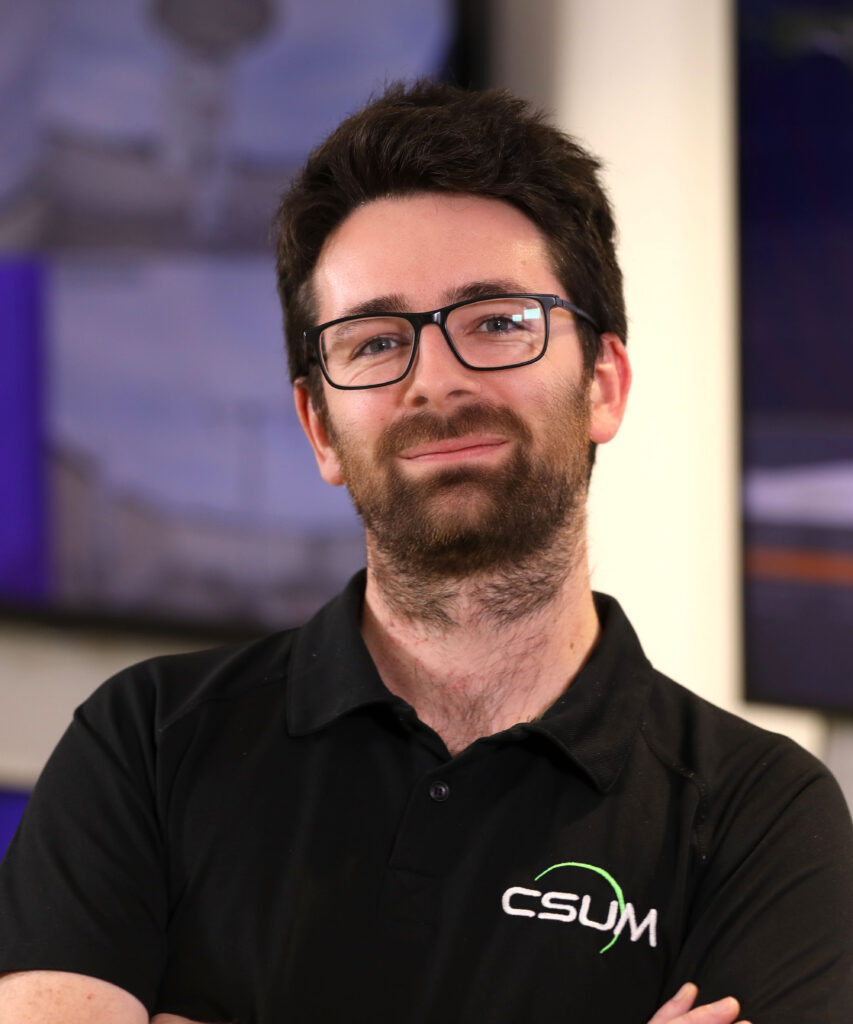
Tristan Allain, CSUM
is ingenior spécialises in space systems with an experience cubasat platforms. After 6 year at LISA on the MOMA-GC instrument (ExoMars Rosalind Franklin rover), and on the developments of student cubesats, he joined CSUM in 2019 as a system engineer. In addition to education and training missions, he coordinates the operations and delivery 1U satellites and 3U CELESTA, MTCUBE-2, ENSO et ROBUSTA-3A, and 1U Djiboutians and Senegalese satellites (HYDROSAT, GAINDESAT).
12 february, 2026
Exploring Extreme Exoplanets and Stellar Activity with Small Satellite Missions
Atmospheric escape is a process that affects the structure, composition, and evolution of many planets. Atmospheric escape rates depend critically on the extreme-ultraviolet (EUV) and far-ultraviolet (FUV) photon fluxes from the host star. In this talk, I will present current and future small satellite missions designed to directly observe atmospheric escape from exoplanets and to investigate the EUV luminosity and energy partition of EUV flares on nearby stars. The majority of the talk will focus on CUTE, a 6U CubeSat mission designed to conduct novel observations of the extended atmospheres of nearby close-in planets. CUTE is NASA’s first dedicated exoplanet spectroscopy mission and has collected 6 – 11 transits of each of 10 short-period exoplanets. I will conclude the talk by describing the upcoming MANTIS mission, a 16U CubeSat that will make simultaneous observations of nearby stars in four spectral bands from the EUV through the optical (~10 – 600 nm).
Kevin France, University of Colorado
is a professor at LASP/University of Colorado, his research focuses on exoplanets, their host stars, and instrumentation for ultraviolet astrophysics. He is the PI of numerous smallsat and suborbital mission and currently working on the development of NASA’s HWO concept.


12 march, 2026
Aalto suite (Title to be specified)
Abstract
Jaan Praks, Aalto University
is associate professor and has been working with microwave remote sensing, scattering modeling, microwave radiometry, hyperspectral imaging, and with advanced SAR. He is leading the programme that led to develop the two first Finnish satellites.
Spring
09 april, 2026
SWING – Space Weather and Ionosphere: the Nanosat Generation
The webinar will present Hemeria satellites, focusing on SWING: Space Weather and Ionosphere, the Nanosat Generation.
Building on ANGELS, a 12U platform proving five years of high availability mission, and Kineis, a 25-satellites IoT constellation demonstrating a very efficient 30 kg-class system, Hemeria is now advancing larger GEO and Earth observation platforms.
SWING inherits from Kineis, carrying four payloads to serve ESA and the Space Weather community. From 30 mission requirements, Hemeria and its consortium design a full satellite and system to deliver L1 products on solar X-ray flux, e- density and temperature, high-energy particle fluxes, and ionosphere sounding via GNSS radio occultation. Launch is scheduled for March 2027.
The webinar will detail the project context, instruments, and system concept ensuring 30–60 min latency and high availability.
It will finally introduce the future Space Weather constellation inspired by SWING.
Pierre-Yves Guidotti, Hemeria
is Chief engineer at Hemeria for the nanosatellites since 2023. He has been satellite architect for the 25 Kineis satellites, and is now in charge of the SWING project for ESA. He has 20 years of GNC and system experience at CNES then as advanced studies manager at Airbus DS.
21 may, 2026
The LUMIO Mission: Impact Flashes Detection from the Lunar Farside
The Lunar Meteoroid Impact Observer (LUMIO) is a CubeSat mission designed to study meteoroid impacts on the Moon. Developed under the European Space Agency’s General Support Technology Programme, LUMIO is a 12U CubeSat that will operate from a halo orbit around the Earth-Moon L2 point, providing continuous observations of the lunar farside. LUMIO is led by Politecnico di Milano and supported by the Italian Space Agency (ASI), the Norwegian Space Agency (NOSA), United Kingdom Space Agency (UKSA), and Swedish National Space Agency (SNSA). LUMIO has successfully passed Phases A and B and is currently in Phase C, with launch foreseen in 2028.
By detecting Lunar Impact Flashes (LIFs), the brief bursts of light produced when meteoroids strike the Moon’s surface, LUMIO will extend the coverage of impact monitoring beyond Earth-based telescopes, which are limited to the nearside and affected by weather conditions.
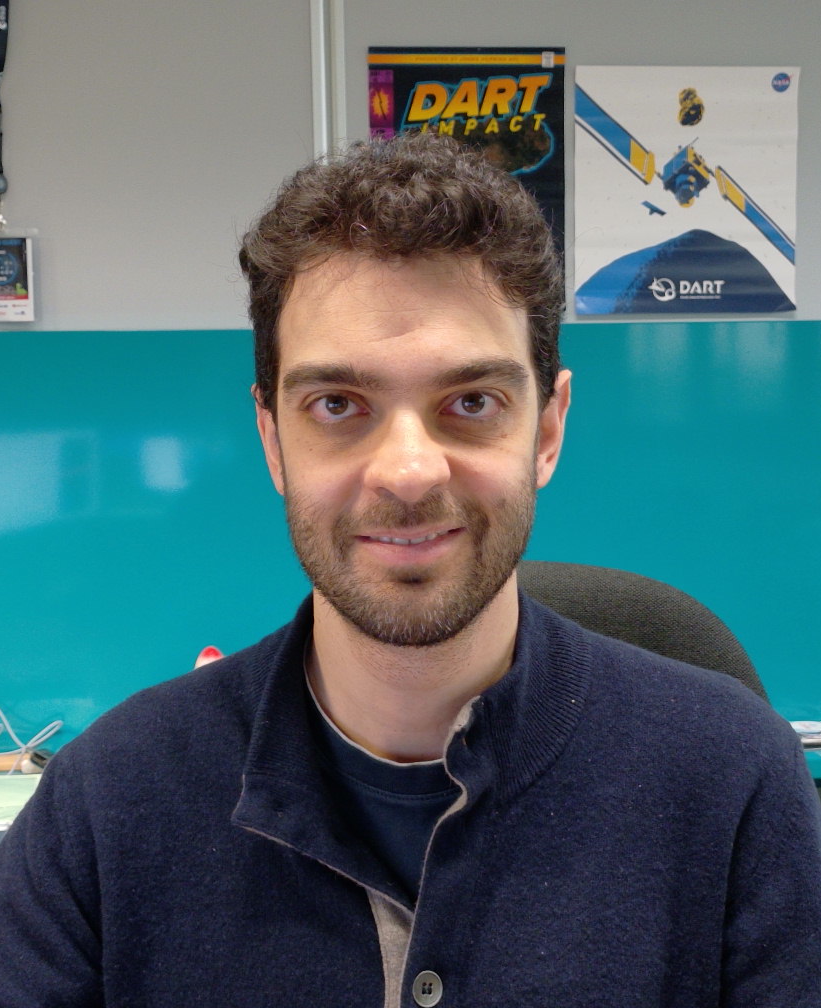
Fabio Ferrari, Politecnico di Milano
is Associate Professor at Politecnico di Milano and Visiting Professor at the University of Bern. He is the Science Lead of ESA’s LUMIO Mission and Instrument PI on ESA’s Hera mission (Milani NavCam), and ESA’s RAMSES Mission (HORUS camera). He is the PI of the ERC project TRACES, aimed at the study of the mechanical properties of asteroids..
11 june, 2026
Improving CubeSat Success: ESA’s Role in Providing Infrastructure and Expertise for CubeSat Testing
The European Space Agency (ESA), primarily through the ESTEC centre and its network, provides essential ground verification and qualification support for CubeSats, thereby improving their success rate. This centralized infrastructure significantly de-risks small satellite missions and accelerates their Technology Readiness Levels (TRL).
Key areas of support detailed include:
- Environmental Testing: Access to ESTEC’s facilities, such as large Thermal Vacuum (TVAC), Vibration, and Acoustic chambers, and specialized Cleanrooms, for system-level verification.
- EMC/Gauss Testing: Use of ESTEC’s shielded facilities for rigorous Electromagnetic Compatibility (EMC) and Electrostatic Discharge (ESD) compliance, crucial for magnetic cleanliness and attitude sensor performance.
- Attitude Determination and Control System (ADCS) Testbed: Availability of the ESTEC ADCS testbed, featuring an air-bearing platform, to simulate microgravity and the Earth’s magnetic field for dynamic hardware-in-the-loop testing of ADCS algorithms and components.
- Radiation Hardness Assurance (RHA): ESA coordinates access to proton and heavy ion irradiation facilities, including support for component-level decapsulation (“delidding”) of COTS parts for qualification against the space radiation environment.
- Propulsion System Characterization: Access to ESTEC’s facility to perform testing of electric and chemical propulsion systems in vacuum chambers and characterization of platform-coupling effects.
ESA’s framework offers a critical, end-to-end service fostering innovation in the small satellite community.
Simone Simonetti, ESA
is a Systems Engineer at ESA ESTEC centre in the Netherlands, specialising in CubeSats and deep space missions. He leads several key projects in small satellite technology within ESA TEC-SIU division.